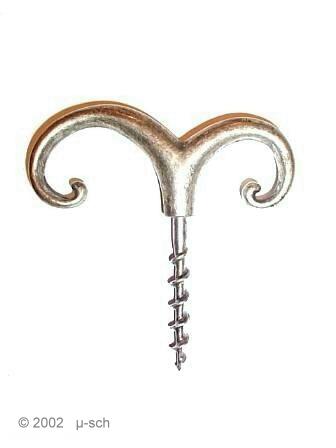
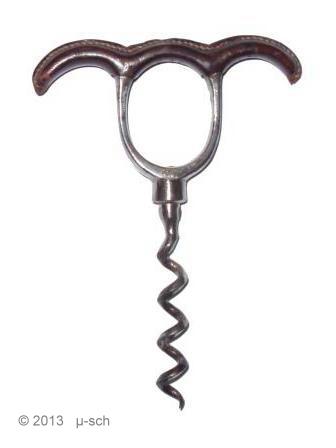
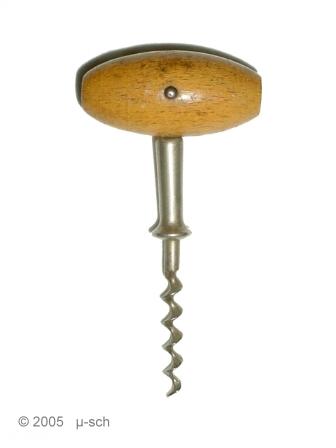
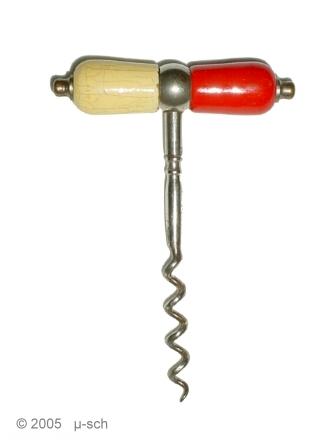
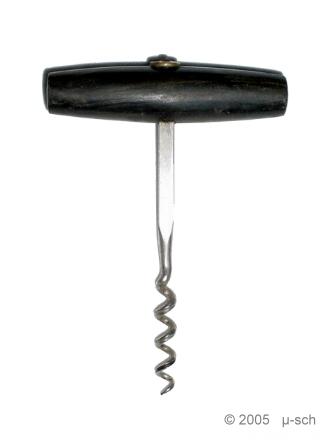
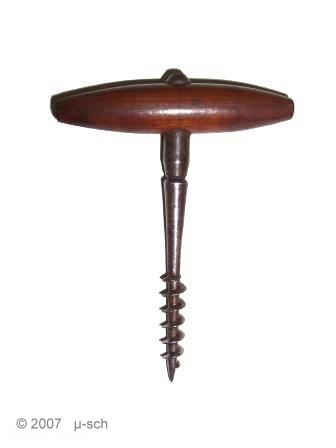
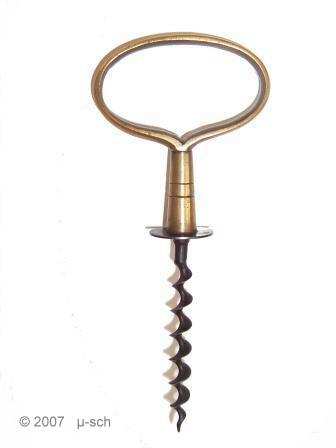
A tin plated corkscrew with an asymmetric, cast brass handle and an archimedian thread.

material: brass, steel

marking:
none


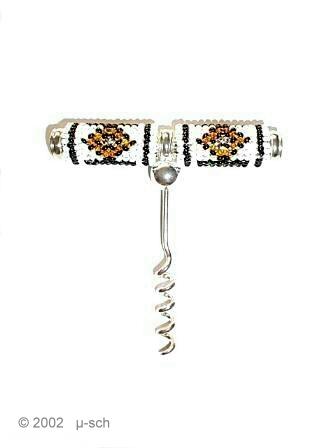
Chrome- or nickelplated corkscrew with a handle with glasspearls.

It's a gift from my parents from South Africa. In the giftbox I've found a little note

"Made by BUSI in South Africa"

Who or where ever Busi is, thanks a lot......

material: metal, glasspearls

marking:
none

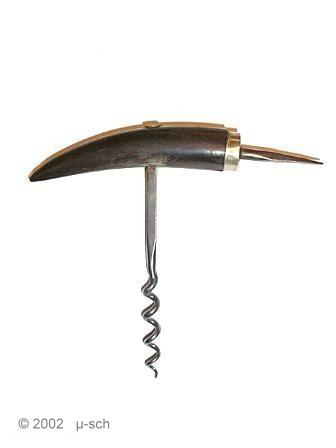
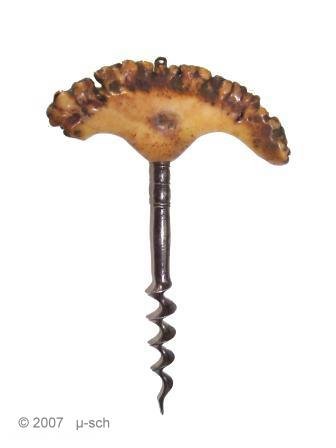
This horn handle direct pull corkscrew with a wire breaker in the end of the handle was invented by

Kemter & Bell

of Melborne, Australia

in the year 1913.

Although many companies in England produced these, they seem to be far less common in England than in Australia and New Zealand where they frequently pop up.

material: horn, steel, brass

marking:
SLASH No 30 or ST. ASH No 30


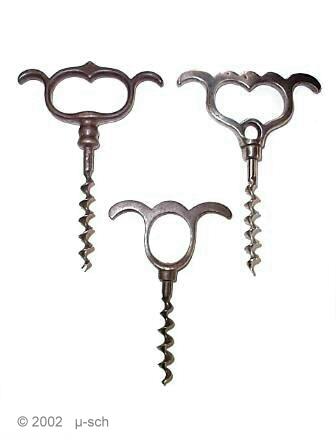
One three finger pull (offen called "eyebow") and two four finger pulls.

Finger pulls are designed to fit two, three or four fingers. Most of them are English.

left: with a cast iron handle

right: for use independently or with a lever

material: steel

marking:
all none


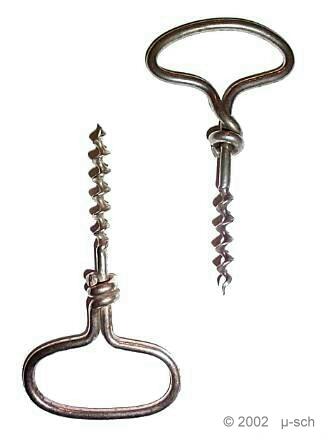
Two simple three finger pulls formed out of one piece of steelwire, shaped and wrapped.

material: steel

marking:
none


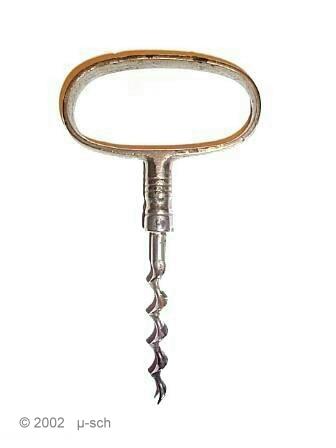
This

full grip finger puller

often referred to as the

Cellarman's Corkscrew.

You can find this typ with different threads or with a wire helix.

material: nickelplated steel

marking:
none

new

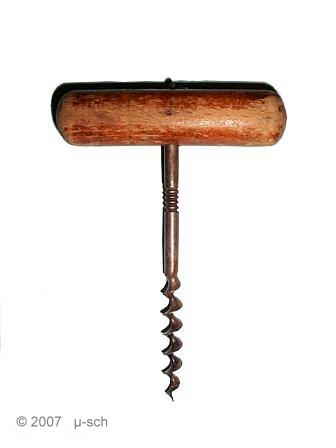
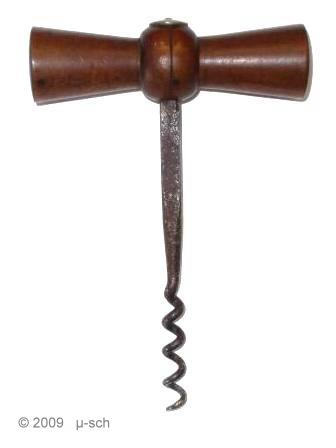
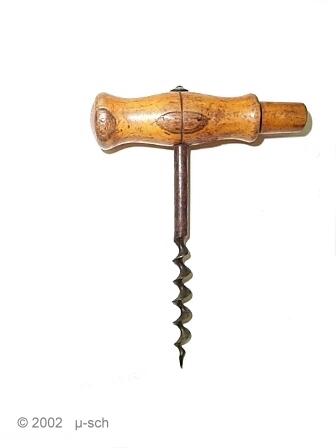
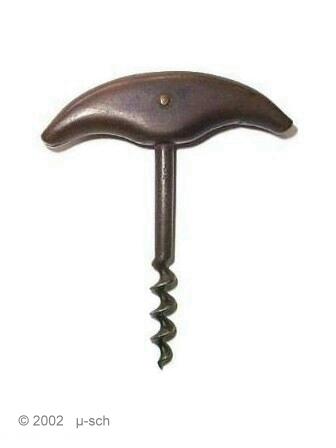
Simple T-form corkscrew with wooden handle, grooving at the shaft and centre worm.

Manufactured probably in Germany.

material: steel, wood

marking:
none

new

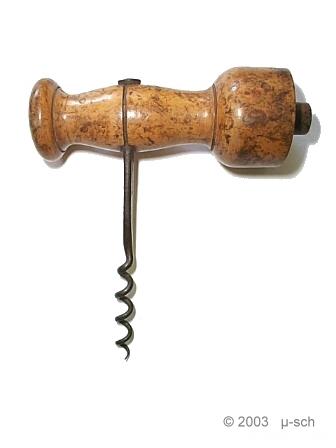
Classic swedish design from Eskilstuna with the typical barrel-shaped wooden handle.

material: steel, wood

marking:
none

new

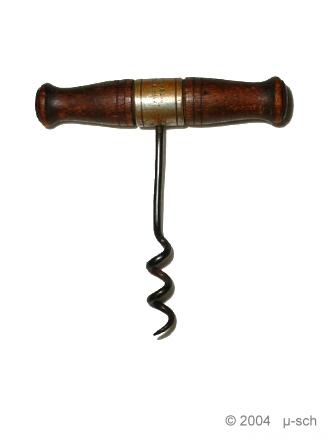
T-form corkscrew with nicely made wooden handle, grooving at the shaft and helical worm.

Manufactured probably in Germany.

material: steel, wood, brass

marking:
none

new

T-form corkscrew with turned horn handle, square shaft and helical worm.

Probably made in England or France.

material: steel, wood, brass

marking:
none

new

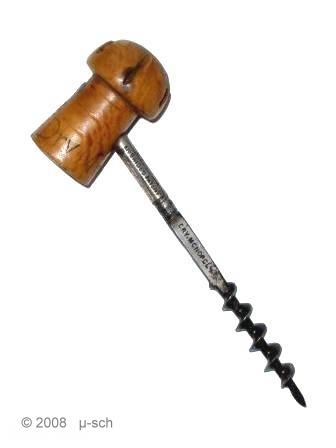
Mid-size corkscrew with a torpedo shaped wooden handle and an archimedean worm.

Origin: probably England

material: steel, wood

marking:
none


In 1876,

Edwin Wolverson

registered his corkscrew in England for a design that added a hole in the shank for the middle finger when grasping the corkscrew.

material: steel, brass, wood

marking:
none


In 1870 , Englishman

Hiram Codd

introduced an internally stoppered bottle. The bottle has a glass ball molded into a chamber in the top.

On May 10, 1872 he registered his first opener for depressing the glass balls in the neck of the bottle.

material: steel, wood

marking:
none


In 1870 , Englishman

Hiram Codd

introduced an internally stoppered bottle. The bottle has a glass ball molded into a chamber in the top.

On May 10, 1872 he registered his first opener for depressing the glass balls in the neck of the bottle.

material: steel, wood

marking:
none

new

Corkscrew according to

Matt Perkin's 1884 English patent.

The liquid runs through a part of the handle to a spout in the tubular shaft.

material: steel, brass, wood

marking:
CONEY'S PATENT

new

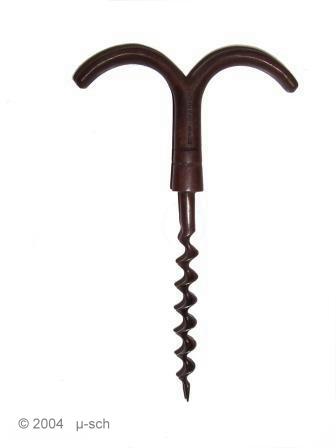
British 2 finger pull corkscrew with a pointed centre worm.

material: steel

marking:
BERKELEY & Co Ltd
1933

new

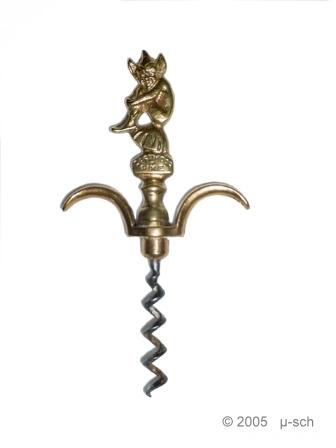
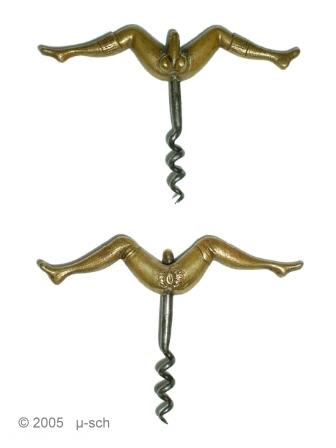
British 2 finger corkscrew with figural brass handle.

material: steel, brass

marking:
???
Dartmoor Pixie

new

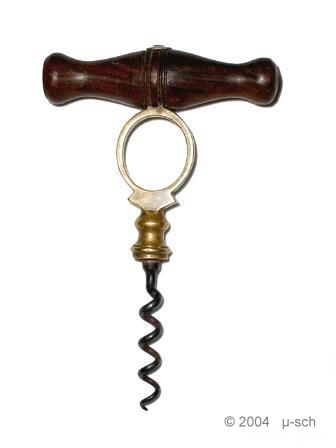
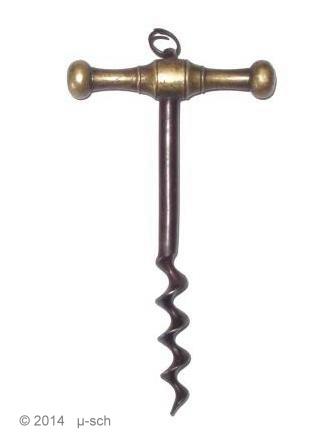
3 finger corkscrew with handle made out of brass and Henshall button.

G.F. Hipkins Type, often marked with UNIVERSAL G.F. Hipkins

material: steel, brass

marking:
none


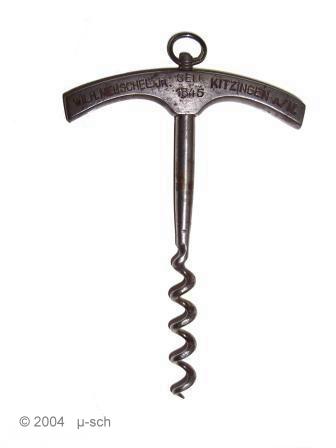
This T-form corkscrew was probably made after 1903 in the Thuringian Wood. The still existing vinery

Weingut Meuschel

became in 1903
Königlich Bayerischer Hoflieferant and has had good business connections to the Thuringian Woods and Saxonian area.

material: steel

markings:
WILH.MEUSCHEL.JR
SEIT 1845
KITZINGEN A/M.
KGL.BAYER.& HERZOGL.SÄCHS.HOFLIEFERANT


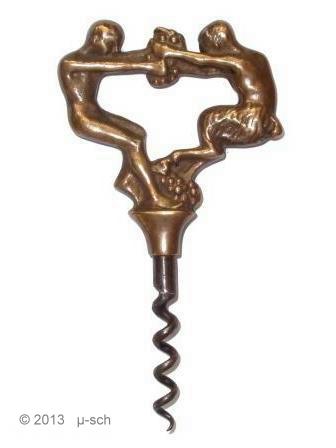
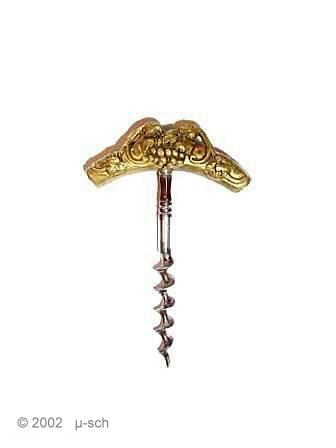
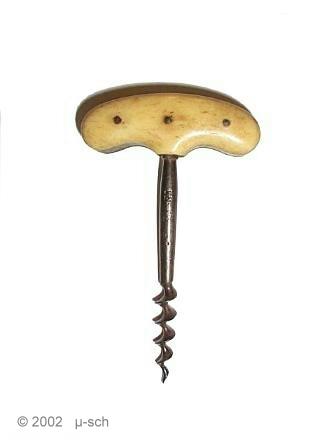
A nice and unusual corkscrew with an artistic styled brass handle showing wine grapes.

decoratively turned shaft

material: brass, plated steel

marking:
none


This Mid-Size corkscrew is only approx. 3" long. It was used for small corks.

origin: France?

material: steel, horn

marking:
LOSSAN or LUSSAN


Another Mid-size corkscrew with a really nice horn handle with bone covers.

Origin: probable France

material: steel, bone, horn

marking:
LE or CE

new

French T-form corkscrew with a figural brass handle.....

Manufactured by
Jean-Étienne Gagnepain,
probably between 1871 and 1893.

material: steel, brass

marking:
Gagnepain


Twenty three patents for corkscrews and corkscrew producing machinery were issued to

William Rockwell Clough

of Alton, New Hampshire. The first in 1875 for little wire corkscrews for medicine bottles and small corks, the last one in 1920 for a knife with a folding worm.

right: with advertising on the handle
left: with a wooden sleeve

material: wire, wood

marking:
none


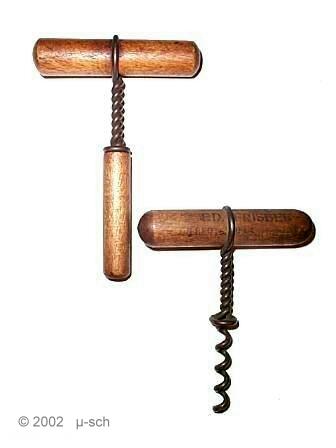
T-form corkscrew

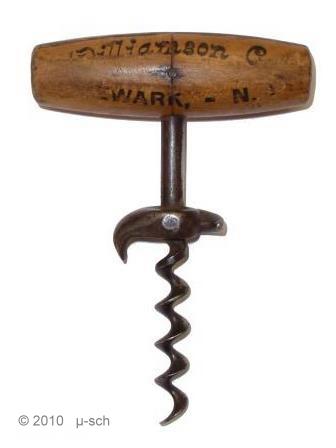
American Patents No.
315 773, April 14, 1885
317 123, May 5, 1885

Edward P. Haff

Technically not corkscrew patents but handle mount patents by Haff, manufactured in different styles and sizes.

material: steel, wood, brass

markings:
HAFF M'F'G.Co.NEW
PATdAPL.14.85.MAY5TH85

table of content