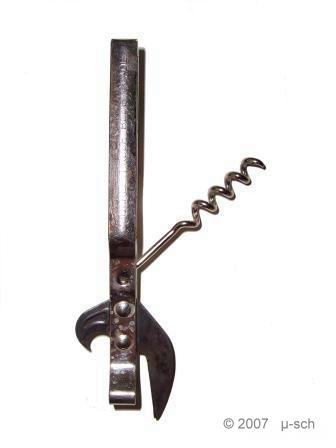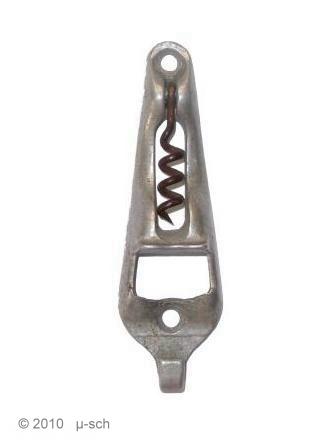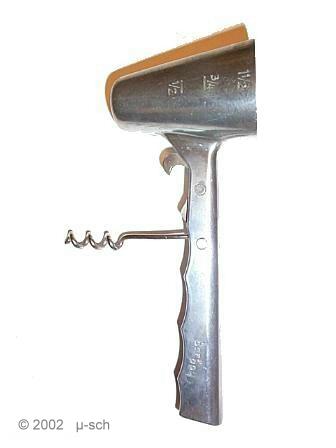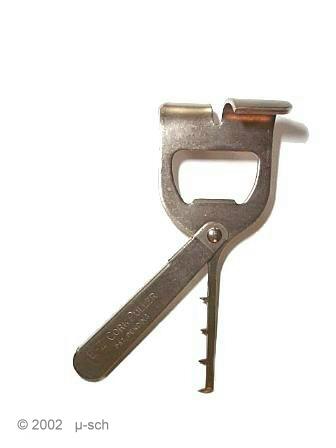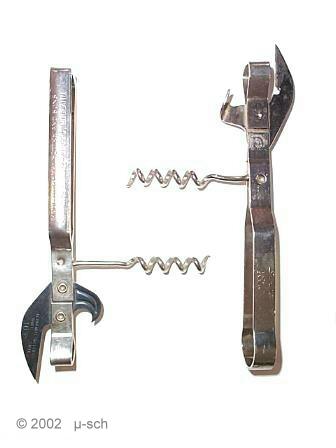
Two british canopener / corkscrew / bottleopener combinations.

Millions of them have been made and sold in houseware stores. They're still selling.

material: steel

marking:
left: Made by Henry Squire & Sons
Willenhall Staffs. England

right: Sky-Line
Made in England

new


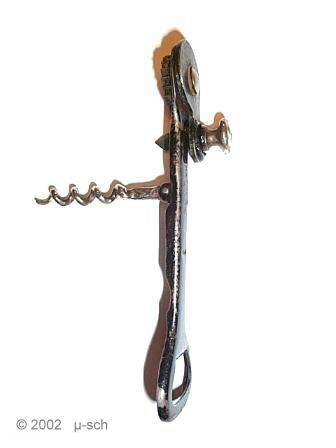
Same combination of corkscrew / bottle opener as above.

A gift from Australia.

material: steel

marking:
Made by Henry Squire & Sons
Willenhall Staffs. England


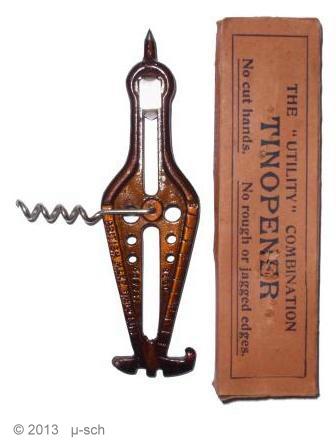
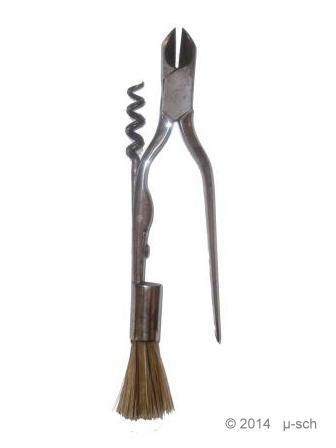
Just a German version of a canopener / corkscrew / bottle opener combination.

material: steel

markings:
Pathos Stahl


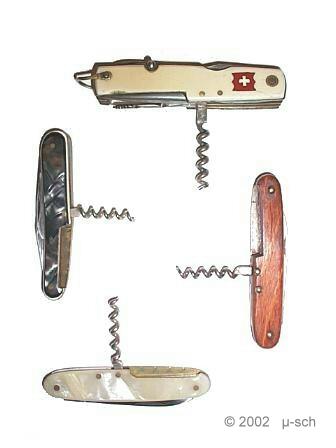
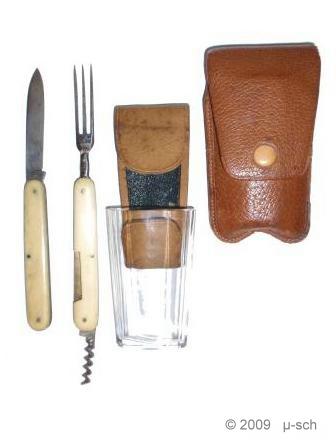
Four corkscrew knifes with different handle materials. On the top bone or horn, on bottom Mother of pearl? or plastic, on the right side wood and on the left plastic.

I'm not sure where the "Swiss Army Knife" has been produced, but

the Victorinox company of Switzerland gave me the information, that it's made between the 1950th and 1960th in France.

Thanks a lot !!!

markings:
top: none
right: Made in Germany
left: Rostfrei, Altenbach, Solingen
bottom: Rostfrei and a symbol


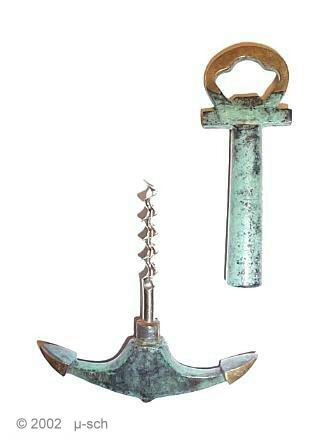
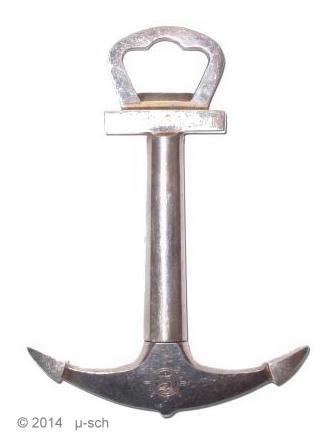
An anchor...

...turn an anchor upside down and it is a perfect corkscrew handle. With a friction fit sheath with a caplifter on one end.

material: casted brass, steel

marking:
none


Caplifter and corkscrew, which you can find in most of the american motel rooms.

In 1925, Thomas Hamilton of Boston, Massachusetts, was granted a patent for his wall mounted "Bottle Cap Puller". Three years later, the corkscrew appears with the opener in Raymond Brown's patent. He added a corkscrew at the top of the cap lifter.

material: nickelplated brass, steel

marking:
Brown Mfg. Co
Newport News. VA
Patd. Apr.25.
Made in U.S.A.


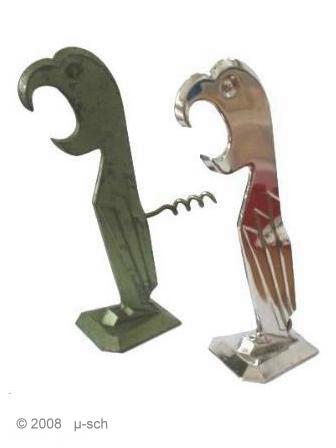
In 1929, Manuel Avillar of New York was issued an American design patent for a "Bottle Seal Remover". A parrot without a corkscrew tail is shown in the patent drawing.

Although Avillar's parrot were produced as a caplifter only, the version with a folding corkscrew tail is most frequently found.

material: cast iron??, steel

marking:
Negbaur
U.S.A. Pat'd

Harry Negbaur was a tool and die maker for the Dollin Die Casting Company of Irvington, New Jersey, that cast the figures.

new


Same corkscrew as above, this time with a green finish.

material: cast iron??, steel

marking:
none


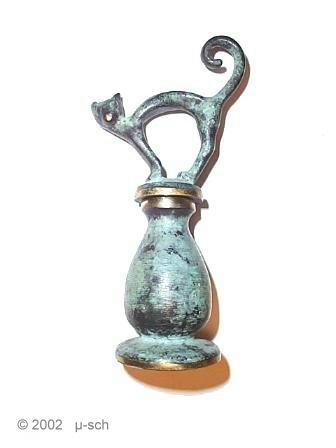
This special one is in form of a cat. The steel helix is hided inside of the sheath stand.

...decorative, isn't it !!

material: brass, steel

marking:
none


In the year 1875, William Clough invented a small wire

one finger pull corkscrew,

which in the ensuing years would undergo several changes in appearance as well as manufacturing processes.

This one has a wooden sleeve, others often nickel plated brass sleeves. Most of them have advertising on the sleeve.

material: steelwire, wood

marking:
none


BAR BOY - the six in one applience - from

Tempro Incorporated, New Haven, Conneticut.

A jigger with a corkscrew and a caplifter

material: aluminium, steel

marking:
bar boy


E - Z CORK PULLER

Puller with a folding cover for the toothed shaft.

Push the blade between cork and the neck of the bottle, turn the shaft (force the teeth into the cork) and remove cork by pulling.

origin: U.S.A. ?

material: steel

markings:
E-Z CORK PULLER
PAT: PENDING


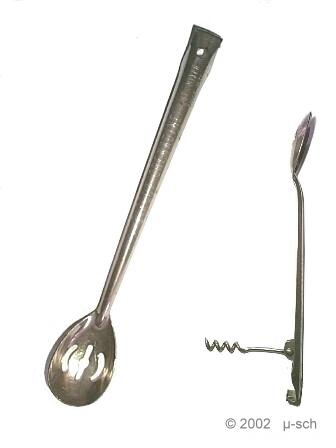
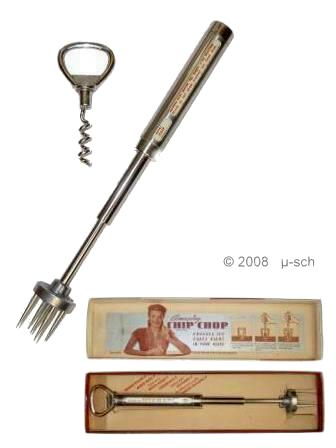
Bar-Mix-Spoon with colapsable corkscrew.

Origin: U.S.A. ?

material: steel

marking:
Pat Apl'd for
Bottle opener

with advertising:
Giroux Grenadine
Best Mixer since 1871


Electric corkscrew

CorkFix HR2573

Made by PHILIPS of Eindhoven, Holland.

German design patent

DE3519566C2

from May 31, 1985

material: .............

markings:
PHILIPS

Was this really necessary ????


This is a sparkling wine opener, mainly for plastic corks

SEKT - BOY

German patent: D.B.P. 1 176 017

Anne Maria Scharwat, Frankfurt

September 4, 1964

manufactured by

LAURUS, Solingen, Germany

material: nickelplated steel

markings:
LAURUS Solingen
Sektboy DBP


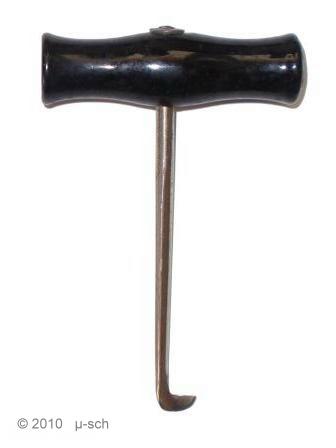
I have no idea what to say about this item. I don't know what these two hooks on the left side are good for. If somebody knows something, please let me know.

wolfgang@muesch-online.com

material: steel, brass, alu

markings:
none


Corkscrew made by the Syracuse Ornamental Company (SYROCO) of Syracuse, New York. It is compression molded with a composition of wood powder and thermoset resin. Syroco catalogs place the corkscrew to be between the years 1940 and 1950.

The worm and bell were supplied by Williamson Company, New Jersey.

material: see above

markings:
none

new


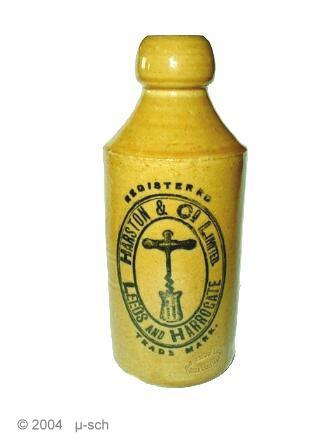
Stoneware jug, depicting a corkscrew screwed in a cork

with advertising:

REGISTERED
HARSTON & Co LIMITED
LEEDS AND HARROGATE
TRADE MARK

marking:
M.KNOWLES & SON
CHESTERFIELD

new


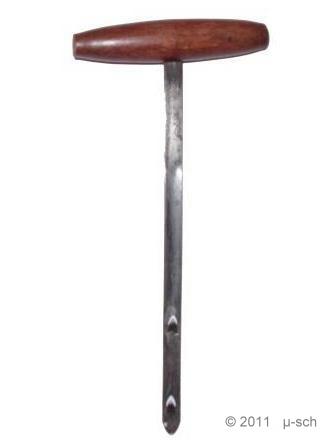
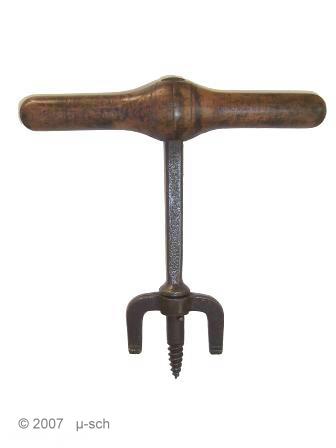
This is an exemplar of a barrel corkscrew .
It is used to extract wooden corks out of barrels. The handle is big enough to use both hands.

Origin: France

material: steel, wood

marking:
F
Symbol (Triangle out of segments of a circle ) with letters


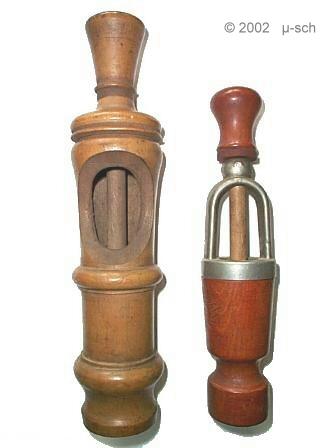
To insert a cork into the bottle, a corking machine is used. The cork is inserted into an opening in these wood corkers. The corker rests on the bottle neck and the plunger is used to force the cork through a tapered hole and into the bottle (largest diameter at the top!)

1 picture of

wood corkers / corkdrivers

At last, but I hope not at least...

material: wood, tin plate, aluminium

marking:
none

x

.....to be continued !!!

table of content